

My first SaaS app took nine months to build. CareerCred took three weeks.
The difference? I used Claude Code for almost everything.
I’m not a beginner. I’ve built six apps. I have a full-time job, a family, and limited free time. So when I found a tool that let me ship faster without losing control of the code, I went all in.
Here’s exactly how I did it.
Start with docs, not code
Before I wrote a single line of code, I created two docs: a project spec and a dev plan.
I didn’t realize it at the time, but these two docs are the reason I shipped so fast.
Project spec
I spent 3–4 hours working with Claude Chat to build out the spec. At first it felt like a waste of time. In hindsight, it was the best investment I made on this project.
The spec covered everything: tech stack, authentication, V1 features, pricing, beta phase, API routes, and more. It wasn’t just a technical doc. It was a source of truth for every decision I made along the way.
Things like the cron schedule for reminder emails, the early adopter price, and the environment variables I'd need in production. All of it lived in the spec. No guessing. No context switching.
Claude Code doesn’t need all of this upfront. But giving it more context meant better output. Every time.
Dev plan
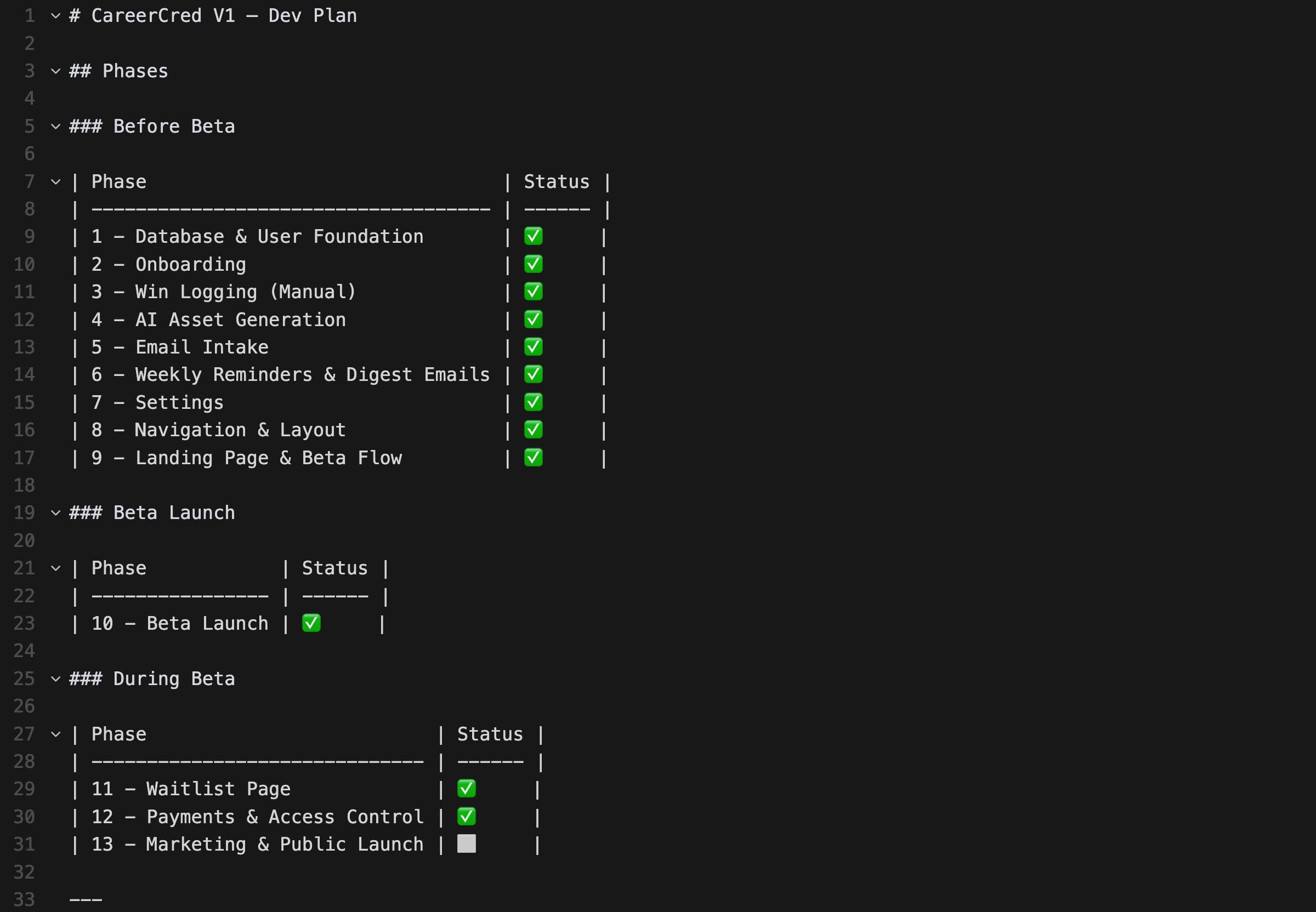
Once the spec was done, I used it to generate a dev plan. The goal was simple: break the project into phases, tasks, and subtasks. Small and specific.
I wanted to review every PR myself, so I told Claude to keep tasks small. Small enough that most could be done in under 30 minutes, start to finish. That included Claude writing the code and me reviewing and testing it locally.
Here’s what that looked like in practice:
- [ ]  Onboarding form — collect name, job title, timezone (auto-detect)
- [ ]  Wins feed (/dashboard/wins) — full card list, newest first; incomplete wins visually distinguished
Small tasks create momentum. When you can check something off, you want to keep going. That’s what kept me coming back to this project instead of abandoning it like so many others.
Building in 30-minute windows
I have a full-time job, a family, and other interests. My free time comes in 30-60 minute windows. The dev plan was built around that reality.
A typical day
Open Claude Code, ask what’s next on the dev plan, and either run with it or adjust based on my schedule.
For tasks I’m unsure about, use plan mode to see what Claude is thinking. Otherwise, ask Claude how it wants to approach something and accept the edits.
For trivial commits, push straight to main. For most tasks, have Claude create a feature branch, update the dev plan, commit the changes, and open a PR with a test plan.
When I have time again, review the PR on GitHub and run through the test plan.
Tell Claude to merge the PR.
Why this worked for me
I didn’t want to “vibe code” this project. I’m a software engineer. I know how to code. So I made a point to understand what was being built.
That’s why I used PRs for almost everything. It gave me a checkpoint to review the code, run the tests, and stay in control.
Claude wrote most of the code. But I made suggestions, changed course when needed, and understood every decision. The result is an app I own and actually understand.
Building a SaaS app on the side in 2026 has never been easier. Tools like Claude Code have changed the game.
But here’s what six apps have taught me: building is the easy part. Getting it in front of users, finding beta testers, marketing it… that’s where most side projects stall.
The faster you ship, the faster you get to the hard part. And the hard part is what actually matters.
If you have an idea and limited time, give Claude Code a shot. It handles the easy part so you can get to the hard part faster.
What are you building, or what have you been putting off starting?
CareerCred helps engineers track their wins and tell their career story. Join the waitlist for early access: https://careercred.io
Did it all go according to plan, or were there pitfalls and annoyances? If you had started with the same detailed spec and upfront planning, how long do you think it would have taken to build it all by yourself? How does the app shape up with regards to security?
Claude can help to save time to build something easy, but the hardest part is to get it over the finish line towards real users who’ll test and eventually pay for it. By the way, my own merge conflicts never land in AI, I fix them all by hand.