

Layoff Lessons: Part 1 of 3
A short series on what two layoffs taught me, so you don’t have to learn it the hard way.
It was my day off back in 2024. I opened my work laptop to check in, but I couldn’t. A message stared back at me: Your computer has been locked.
I checked a Discord group chat with my coworkers. Several people said they’d been laid off. Apparently there was a meeting that morning, and I missed it.
Did I just get laid off on my day off?
I checked my laptop again. Still locked.
A few hours later, HR called to tell me what I had already figured out. I never heard from my manager that day.
Stories like this have become normal since 2020. People get laid off on vacation, on parental leave, even sick in the hospital. Companies can’t control where you are when the news drops. But they can control how they deliver it. When they show no compassion, you feel like a row on a spreadsheet. And that stings.
A layoff is a business decision
When you get laid off, it’s easy to take it personally. You think about the projects you shipped, the late nights, and the sacrifices you made to give your job your best.
But a layoff is a business decision. Period. A few people at the top decide to move a number from one column to another. It doesn’t matter how many kids you have, whether you’re up for promotion, or whether you’re living paycheck to paycheck. They just decided your salary was a cost they could cut.
That sounds harsh, and it is. But it’s also good news. Remember that row on a spreadsheet? That’s exactly why it isn’t about you. The decision has nothing to do with the value you brought or your worth as a person.
It still sucks. And finding your next job might be hard. But don’t let a layoff erase the career you’ve built or what you still have to offer. You are more than your job title.
Company loyalty is dead
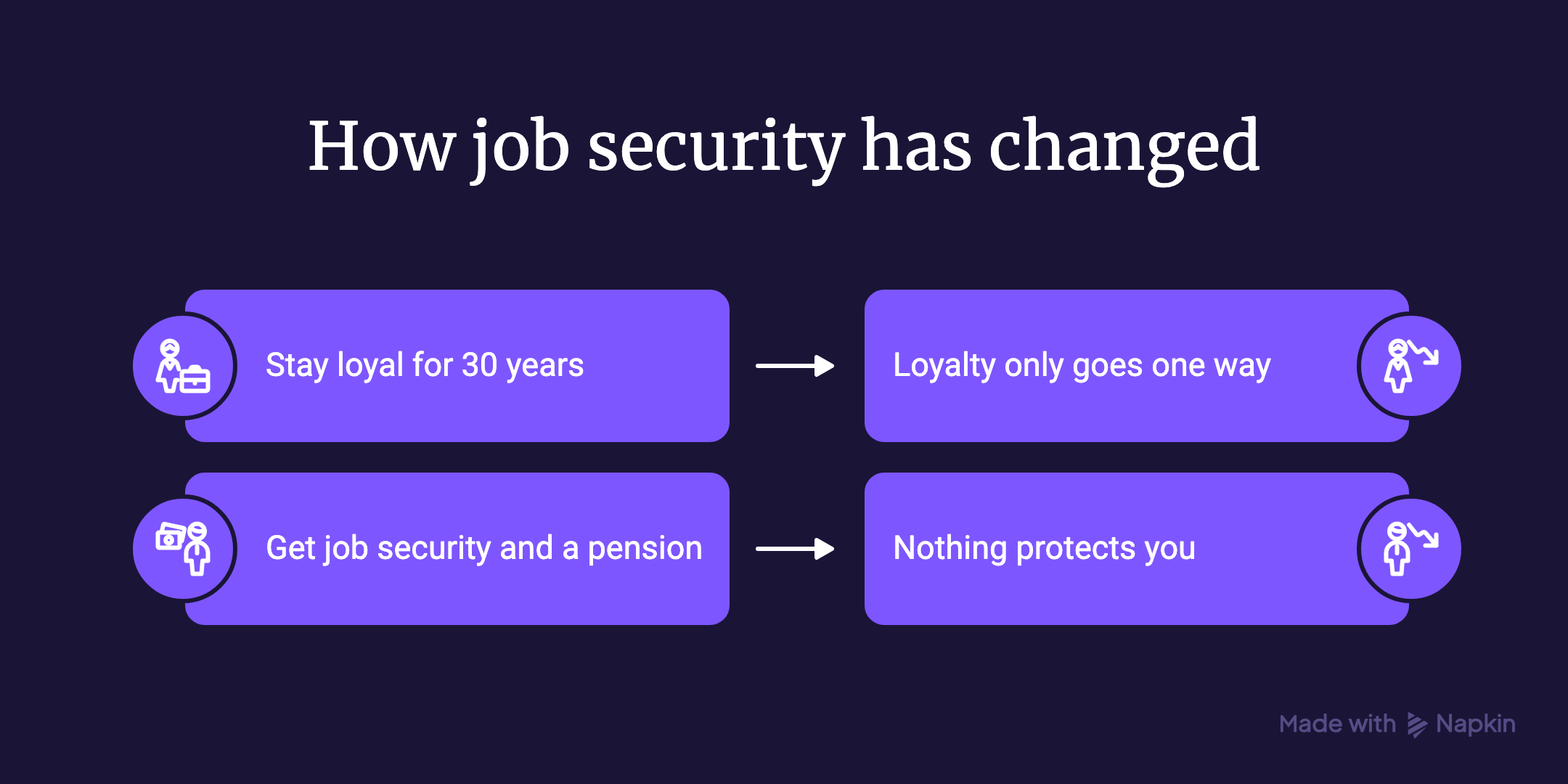
A few generations ago, work looked a lot different. You worked hard for 30 years and stayed loyal to the company. In return, you got job security and retired with a pension.
That deal is gone. Layoffs hit every industry and every type of employee. Your salary, your years at the company, your last performance review. None of it protects you.
When I posted about my two layoffs on LinkedIn, this came up in the comments again and again: you can’t trust the company. Loyalty only goes one way now. Companies do what’s best for them, not you.
It took me two layoffs to finally get this. But once I did, it changed how I showed up at work and at home. I stopped letting work creep into my evenings and weekends with my family. And I started a side business, so I’m not relying on one paycheck.
What you should (and shouldn’t) say after a layoff
Repeat after me: I don’t owe my former company anything after a layoff.
That includes a gratitude post. I know a lot of people feel pressure to write one. They don’t want to look bitter to recruiters and hiring managers. Or they worry that saying something negative could put their severance at risk. But posts that do nothing but praise the company come off as fake. And a little cringey.
Want to thank your old coworkers? Great. Do it privately. A direct message means more than a tag in a post anyway.
So what should you say? Be honest with yourself and your network. Acknowledge what happened, then focus on you. Share what you accomplished and how you grew. Say what you’re looking for in your next role.
Honest doesn’t mean trashing the company, though. Skip the blame, the names, and the inside details. Talk about how you feel and what’s next. That’s the post that helps you land your next job.
Both times I got laid off, I barely mentioned the company in my LinkedIn post announcing it. I was upset, confused, and worried. But I focused on me and what I wanted next, not on thanking the company for letting me go.
My first layoff didn’t change me. My second one did. Sometimes you have to learn a lesson twice before it sticks.
A layoff is a business decision. Company loyalty is dead. And you don’t owe your old company anything.
I also learned that no job is safe enough to bet everything on.
Next time, I’ll share why I stopped relying on one paycheck.
Locking someone's laptop on their day off and letting HR call hours later is a choice somebody made, and it was a cheap one. I think having loyalty to any one company is foolish now, and I'd rather people put that loyalty into work nobody can lock them out of.
Thanks for sharing, I'm sorry about your layoffs, I can't imagine the shock and betrayal you must have felt. I agree with your view on on not taking it personal, that'll save you the time and stress of worrying about things beyond your control.
For some reason, I can only listen to this post and can't find the associated text. Could be a Substack bug or something.