

The Messy Middle: Part 2 of 2
A short series on how I’m navigating the messy middle, and how you can too.
Last time, I admitted that I don’t have it all figured out. I’m in the messy middle with my career and my side business.
The old me would have been embarrassed to say that. The questions, the doubt, and the discomfort would have kept me frozen and quiet.
But I’ve started to see this phase differently. When I look past the hard feelings, I see a chance to grow and change.
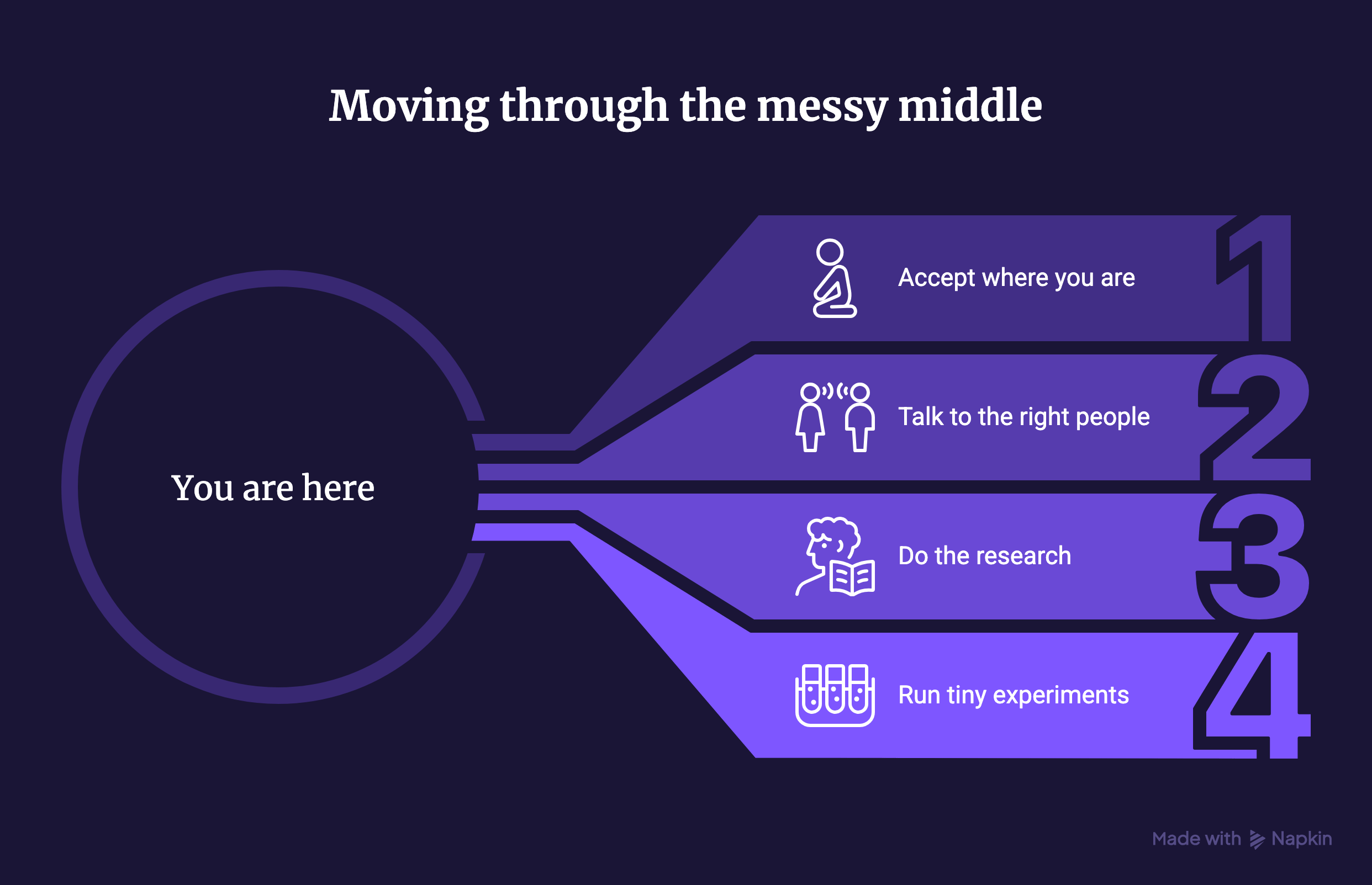
Here are four steps I’ve been taking in the messy middle. They’ve helped me feel more grateful for where I am and more excited for what’s ahead.
Accept where you are
A few months ago, after a long week at work and at home, I asked myself, “Is this really what I want?” I didn’t have an answer. That’s when I knew I was in the messy middle.
I didn’t try to fix it right away. That would have just added more stress. I sat with the feeling for a while. Then, slowly, I started to take action.
That’s the first step. Whatever you’re feeling, admit it. Stuck. More questions than answers. Not sure what’s next. Say it out loud, even just to yourself. It’s a relief when you stop hiding from it.
The truth is, most people are here most of the time. Beginnings and endings are short. The middle is where we spend most of our lives. So you’re not behind. You’re just figuring out what comes next.
Once you drop that weight, the middle stops feeling like a bad place to be. It’s where you learn who you are and what you can do. And it’s where the growth happens.
Talk to the right people
When you’re stuck, it’s easy to feel like nobody gets it. But you’re not as alone as you think.
When I felt stuck, I wanted to talk about it. I didn’t need someone to tell me what to do. I just needed someone to listen. So I turned to a few close friends. They showed me empathy and compassion, and gave me the confidence to keep going.
Friends are a great place to start. So are former coworkers, people in your network, or a therapist. The right people listen without judging you or jumping in with advice. They don’t need to be experts or know what you should do. They just give you a safe space to be seen and heard. And they share what they notice.
I’d avoid anyone with skin in the game, like a partner or a manager. They may want to help. But it's hard for them not to tell you what they think you should do. Right now, you need less outside noise so you can hear your own voice.
Do the research
If you keep coming back to the same questions, it’s time to dig in. Your gut is pointing you somewhere. Research is how you find out if it’s right.
I wanted to know what engineering leadership was really like. So I talked with people who had made the jump from engineer to manager. I asked a lot of questions. I listened. Then I took time to process what I learned.
The biggest lesson? Being a manager isn’t a promotion from senior engineer. It’s a whole new career path, with a different set of skills.
You can do the same with whatever’s on your mind:
Will I enjoy working in this industry? Learn what those companies are building.
What’s it like at a startup vs. a big company? Ask someone who’s worked at both.
How much work is a weekly newsletter? Ask a writer.
Let your curiosity lead. The answers won’t all come at once. But each thing you learn makes the picture a little clearer.
Run tiny experiments
You followed your gut and did the research. Now it’s time to act. You don’t need to know where it leads. You just need one small, low-risk way to test what you’re curious about.
To see if I’d like coaching, I offered a few free sessions. People reached out. I got real practice listening and asking the questions they needed to answer. And I walked away feeling energized, like I made a difference. That told me more than months of thinking about it ever could.
Here are a few more ideas:
Want to share what you’re learning? Write one article on LinkedIn or Substack.
Curious about management? Offer to mentor a junior engineer.
Want to build an app? Make a short list of problems you’d like to solve.
If it feels too easy, good. It’s supposed to be small. You’re testing the water, not jumping in.
Accept where you are. Talk to the right people. Do the research. Run tiny experiments.
None of this will fix everything overnight. I still don’t have a full answer to “Is this really what I want?” But I’m closer than I was. And I didn’t need a big plan to get here. I just needed to start.
What’s one tiny experiment you could run this week? Tell me in the comments.
If you’re in the messy middle and want someone to talk it through with, I’d love to help. Book an intro chat and we’ll figure out your next step together.